
Glossary of Drainage Terms
Need expert help from our London drainage company?
On this page we have created a glossary of drainage terms to help our clients and customers better understand the work we do as a London drainage company.
One of the reasons we are chosen to perform popular drainage services such as CCTV drain surveys, drain lining, and blocked drain clearance is because our engineers take the time to ensure our customers feel apprised of the work being undertaken. We regularly check in with our customers, letting them know what's going on in language they can understand.
Our expert team of drainage engineers have a huge wealth of experience working on the drains of properties across London and South East England. We passionately believe in using this to help our clients with their drainage issues.
Explore the glossary lower down this page or use the contact form to get in touch right away and we will be in touch as soon as possible.
Drainage Terms & Definitions
An access chamber is an underground structure that provides access to the drainage system for inspection, maintenance and cleaning. In domestic properties, these are often referred to as inspection chambers or manholes.
Any location that allows entry into the drainage system, including inspection chambers, rodding eyes and gullies.
A linear drainage system installed at ground level to collect surface water before it enters underground drainage.
Often used on driveways, car parks and commercial premises.

Allows fresh air to enter the drainage system when wastewater flows through the pipework, helping to equalise air pressure and maintain the water seals within sanitary appliances. Because the valve only opens to admit air, it prevents foul odours and sewer gases from escaping into the property. Air Admittance Valves are commonly installed on soil vent pipes and stub stacks where a traditional open vent pipe is not required.
Installed within a drainage system to help prevent wastewater flowing back towards a property during periods of sewer surcharge or flooding. Under normal conditions it allows wastewater to flow away freely but automatically closes if sewage attempts to flow back from the public sewer. These valves are commonly installed on properties that have previously experienced sewer flooding, particularly basements and lower ground floor properties. Regular maintenance is recommended to ensure they continue to operate correctly.

A drainage contractor recognised by an organisation, local authority or accreditation body as meeting specific standards of competence and workmanship. We are fully accredited by DrainSafe and the National Association of Drainage Contractors (NADC)
Designed to temporarily store large volumes of rainwater during heavy rainfall before releasing it into the drainage network at a controlled rate. Unlike a soakaway, which allows water to soak naturally into the ground, an attenuation tank stores water before discharging it through a flow control device. They are commonly installed on new developments and commercial sites to help reduce the risk of flooding and sewer overloading.
Looks similar to a standard gully at ground level but receives wastewater through underground pipe connections rather than allowing it to discharge directly onto the surface grating. This design provides a neater drainage arrangement and is commonly used to collect wastewater or rainwater while helping to prevent foul odours from escaping.
Occurs when a drainage pipe has insufficient fall or slopes in the wrong direction, preventing wastewater from flowing away efficiently. This allows water to collect within the pipe, encouraging the build-up of silt, grease and other debris, which can lead to recurring blockages. Depending on the severity, the solution may involve regular maintenance, repairs or relaying the affected pipework.
Material placed around a drainage pipe after excavation to support the pipe and restore the surrounding ground.
A specialised drainage fitting, commonly installed within an inspection chamber or manhole, that directs the flow of wastewater smoothly into the chamber channel. Its splayed design helps reduce splashing and turbulence, minimises the build-up of debris on the chamber benching, and improves the hydraulic performance of the drainage system. Barron bends are often used where a drain enters a chamber at an angle or changes direction.
Material placed beneath drainage pipes during installation to provide support and reduce the risk of settlement.
Benching is the sloped or contoured surface formed in concrete at the base of a manhole, positioned alongside the drainage channel. Its purpose is to direct the flow smoothly through the manhole, prevent debris from accumulating on flat surfaces, and provide a stable footing for inspection or maintenance personnel. Properly constructed benching assists with the efficient operation and longevity of the drainage system.
An obstruction within the drainage system that restricts or completely prevents the normal flow of wastewater or surface water.
Joins the side of a main drain, either within an inspection chamber or directly into an underground section of pipework, allowing wastewater from another drain to enter the main drainage system. Where the connection is below ground, the angle of the junction may prevent a CCTV camera from accessing the connecting drain. Purpose-made drainage junctions should be used to provide a smooth, watertight connection.

Commonly found in Victorian drainage systems and originally installed to prevent foul odours, sewer gases and vermin from travelling from the public sewer into private drainage. Because access is usually provided only through a small rodding point rather than an inspection chamber, blockages can be more difficult to clear. Replacement is often complex and costly due to the depth at which these traps are typically installed.
May be required before building over or close to a public sewer or other drainage asset owned by the local water authority. The agreement helps ensure that proposed building works do not adversely affect the sewer or restrict future access for maintenance and repairs. As part of the application process, architects often require a CCTV Camera Condition Inspection and a drainage layout drawing to demonstrate the existing configuration and condition of the drainage system.
Designed to help reduce the risk of internal flooding if a blockage occurs within the drainage system. A Burns Chamber incorporates a sealed metal plate beneath the manhole cover, helping to contain surcharging wastewater within the chamber during certain blockage conditions. Commonly found as part of older cast iron drainage systems, the cover can be unbolted to allow cleaning, CCTV Camera Condition Inspections and repair work to be carried out.

Designed to intercept silt, grit and other debris carried by surface water before it enters the downstream drainage system. A Catchpit works by allowing heavier material to settle at the bottom of the chamber while cleaner water flows out through a higher-level outlet pipe. Regular maintenance is required to remove the accumulated sediment and help prevent blockages or reduced drainage performance.
A detailed inspection of accessible underground drainage using specialist CCTV equipment to assess the internal condition of the drainage system without excavation.
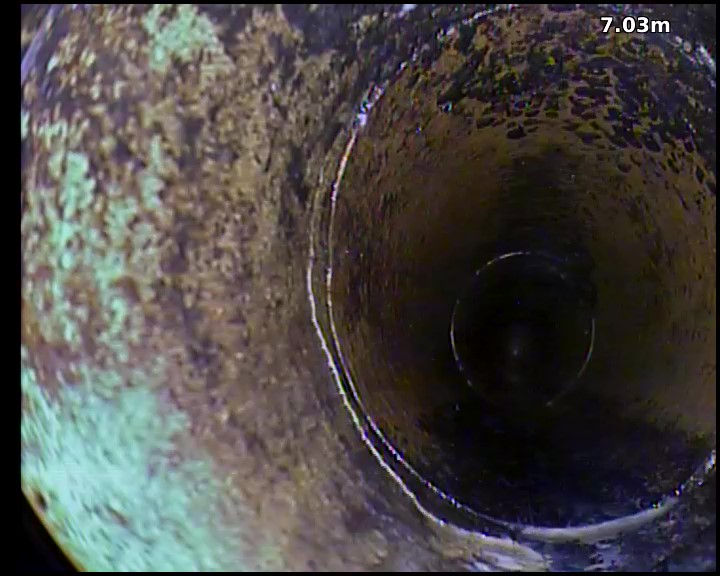
Uses specialist camera equipment to assess the condition of the accessible underground drainage system without excavation. The inspection can identify structural defects, blockages, root penetration, pipe sizes, branch connections and the general condition of the drainage network. CCTV Camera Condition Inspections are commonly carried out before purchasing a property, planning building works, investigating drainage problems or determining the most appropriate repair method. Following the inspection, a written report and CCTV footage are typically provided together with recommendations where appropriate.
Uses specialist camera equipment to assess the condition of the accessible underground drainage system without excavation. The inspection can identify structural defects, blockages, root penetration, pipe sizes, branch connections and the general condition of the drainage network. CCTV Camera Condition Inspections are commonly carried out before purchasing a property, planning building works, investigating drainage problems or determining the most appropriate repair method. Depending on the package selected, the inspection may also include a written report, CCTV footage and a drainage layout drawing.
The recorded video captured during a CCTV Camera Condition Inspection.
This forms part of the inspection record and accompanies the written report.
A sealed underground storage tank designed to collect wastewater and sewage from properties that are not connected to the public sewer. Unlike a septic tank or sewage treatment plant, a cesspit provides no treatment of the wastewater and simply stores it until it is removed by a licensed waste contractor. Regular emptying is essential, with the frequency depending on the size of the tank, the property's water usage and the number of occupants.
The shaped base within an inspection chamber that directs wastewater into the outgoing drain.
Designed to collect surface water continuously along its length rather than at a single collection point. Commonly installed across driveways, patios, car parks and other hard surfaces, channel drains direct rainwater into the underground drainage system to help reduce surface water build-up. Regular cleaning is recommended, as leaves, silt and other debris can accumulate beneath the grating, restricting water flow and increasing the risk of localised flooding.
Occurs when a crack develops around the circumference of a drainage pipe, most commonly in older earthenware or clay pipework. These fractures can allow wastewater to escape into the surrounding ground, potentially leading to ground instability, root penetration and, in some cases, subsidence. If identified early, a circumferential fracture can often be repaired using structural drain lining or patch lining, provided there is suitable access. If left untreated, the defect may deteriorate and eventually require excavation to replace the damaged section of pipe.

Carries both foul water (from toilets, sinks, baths, showers and appliances) and surface water (from roofs, driveways and paved areas) within the same underground drainage network. Combined drainage systems are commonly found in older properties and urban areas built before separate foul and surface water systems became standard. During periods of heavy rainfall, these systems can become overloaded, increasing the risk of localised flooding and the operation of combined sewer overflows (CSOs).
A fitting used to connect or repair sections of drainage pipe.
A public sewer designed to carry both foul wastewater and surface water.
Serves more than one property, allowing wastewater from multiple homes or buildings to discharge into a shared drainage system before reaching the public sewer. Responsibility for communal drainage depends on the ownership, location and configuration of the pipework. Since the transfer of private sewers in 2011, many shared drains and lateral drains have become the responsibility of the local water authority. Where building work is proposed close to these assets, additional approvals, such as a Build Over Agreement, may be required.
An inspection chamber that has been covered by soil, paving, decking or landscaping.
Occurs when an inspection chamber has been covered over or built into a property, preventing normal access to the drainage system. Concealed manholes can make CCTV Camera Condition Inspections, maintenance and blockage clearance significantly more difficult, particularly during emergencies. If access is required, it may be necessary to remove flooring, paving or other structures, which can increase the cost and disruption of future drainage works.
A written report explaining the observations made during a CCTV Camera Condition Inspection, including photographs, recommendations and the general condition of the drainage system.
The maximum weight an inspection chamber cover or drainage component is designed to support.Different load ratings are used depending on whether the cover is located in a garden, driveway, car park or highway.
The height of the top of an inspection chamber or manhole relative to surrounding ground level.
The technical name for structural drain lining, where a resin-saturated liner cures inside the existing pipe to form a new structural pipe.
The process during which the resin within a structural liner hardens to create the finished repair.
Forms a horizontal barrier within the walls of a building to help prevent moisture rising from the ground through the masonry. Commonly made from plastic, bituminous material or slate, a Damp Proof Course protects internal walls, floors and finishes from rising damp. If the DPC is damaged, bridged or ineffective, moisture may rise above the barrier and contribute to damp-related problems within the property.
Uses a remotely controlled robotic cutting head to reopen branch connections after a structural drain liner has been installed. This allows wastewater from connecting drains to flow freely into the main drainage system while retaining the benefits of a no-dig repair. Dancutter machines can also be used to remove obstructions, cut back root penetration and prepare pipework for further repair work where appropriate.
A defective drain is any section of drainage that is no longer performing as intended due to damage, deterioration or poor installation. Common defects include cracks, fractures, displaced joints, root penetration and collapsed pipework.
Deformation occurs when a drainage pipe changes shape due to ground movement, excessive loading or material failure. Depending on the severity, deformation may restrict flow or weaken the structural integrity of the pipe.
Descaling is the process of removing hardened mineral deposits from the inside of drainage pipes. Specialist mechanical equipment is often used to restore the pipe's internal diameter and improve flow.
The diameter is the internal width of a drainage pipe. Domestic underground drainage is commonly 100mm or 150mm in diameter, while commercial and public sewer systems are often considerably larger.
The direction in which wastewater or surface water travels through a drainage system. Understanding flow direction is important when preparing drainage drawings or planning building works.
The movement of wastewater or rainwater from a property into the drainage system.
A displaced joint occurs when two connected drainage pipes move out of alignment. This may allow groundwater to enter, wastewater to escape or tree roots to penetrate the drainage system.
Designed to provide an airtight seal over an inspection chamber, helping to prevent foul odours, sewer gases and wastewater from escaping into a building. Unlike standard manhole covers, Double Sealed Manhole Covers are bolted into place and incorporate rubber seals to create a secure, watertight fit. They are commonly installed inside buildings and other enclosed areas where Building Regulations require an airtight cover.
Refers to the direction in which wastewater flows through the drainage system towards the public sewer, septic tank or sewage treatment plant. During a CCTV Camera Condition Inspection, describing a defect as being downstream indicates that it is located further along the direction of flow from the point of access.
CCTV camera inspections allow information to be gained regarding the underground system including the pipework diameter and if there are any branch connections, all of which is pertinent when deciding the best drain repair technique. There are a number of reasons a drain survey may be carried out and you can see these here.
A drain is a pipe serving a single property that carries wastewater or surface water away from the building before connecting into a shared drain or public sewer.
The removal of blockages, grease, roots, silt or debris from the drainage system using specialist equipment such as high pressure water jetting.
A structural failure where part of a drainage pipe has broken or caved in, preventing the normal flow of wastewater.
The process of digging down to expose underground drainage so repairs or replacement can be carried out.
The slope of a drainage pipe that allows wastewater to flow under gravity.
If the gradient is insufficient, standing water and recurring blockages may occur.
A plan showing the route of the underground drainage system, including inspection chambers, pipework and connections.
A no-dig repair technique where a resin-impregnated liner is installed inside an existing drainage pipe to create a new structural pipe without excavation.
The process of restoring an existing drainage system to good working condition through cleaning, repairs or structural lining.
A single length of drainage pipe between two access points, such as inspection chambers.
A general term describing the investigation of an underground drainage system. At Drainsmart, this is carried out using a CCTV Camera Condition Inspection.
A diagram showing the arrangement of the underground drainage system including inspection chambers, drain runs and flow direction.
Our Comprehensive Architect and Standard Architect packages both allow for this to be superimposed onto supplied plans.
The complete network of underground pipes, inspection chambers, gullies and connections that carry wastewater or rainwater away from a property.
An independent UK accreditation scheme that recognises drainage contractors who demonstrate high standards of technical competence, workmanship and customer service. DrainSafe accredited contractors are independently assessed to help provide reassurance that drainage investigations and repairs are carried out in accordance with recognised industry standards.
This one-way air vent is installed on above ground vertical waste pipes such as a stub stack so that when it is drained (e.g. a toilet being flushed), clean air can enter but foul smells and gasses will not escape.
A method of introducing coloured fluorescein dye into the drainage system to confirm connectivity where CCTV inspection alone cannot provide a conclusive answer.

Traditional drainage pipe manufactured from fired clay.
The process of locating underground drainage using an electronic sonde attached to the CCTV camera. Please note that sonde tracing is a widely used and generally reliable method; however, external factors such as ground conditions, nearby services, metallic structures or signal interference may affect accuracy. Results are therefore provided for indicative purposes only and cannot be guaranteed as definitive.
This service is included within Drainsmart's Comprehensive Architect CCTV Camera Condition Inspection Package.
The process of exposing underground drainage by digging.
Excavation is usually considered only when no-dig repair techniques are unsuitable.
The drainage system already installed at a property before alterations or new construction begin.
A common cause of blocked drains.
When poured into sinks, fats, oils and grease cool inside the drainage system, gradually hardening and restricting the flow of wastewater.
Flooding occurs when the drainage system is unable to remove water quickly enough, causing wastewater or rainwater to escape from the drainage system.
The direction in which water travels through a drainage system.
Understanding flow direction helps identify drainage connectivity and determine the most appropriate repair methods.
A brightly coloured dye introduced into the drainage system to confirm drainage connectivity.
Tracer dye is commonly used during dye testing where CCTV inspection alone cannot determine which drainage runs connect together.
Many products marketed as "flushable" can still contribute to drainage problems.
A drain carrying wastewater from toilets, sinks, showers, washing machines and other domestic appliances.
Refers to wastewater discharged from toilets, sinks, baths, showers, washing machines, dishwashers and other sanitary appliances within a property. Foul water is carried through the drainage system to the public sewer, a septic tank or a cesspit for treatment or disposal. Unlike surface water, foul water contains contaminants and must not be discharged into a surface water drainage system or soakaway, as this can cause pollution and may require corrective action.
A crack within the wall of a drainage pipe.
Some fractures remain stable for many years, while others gradually worsen and require repair.
A gravel-filled trench containing a perforated pipe designed to collect groundwater and direct it away from buildings.
French drains are used for land drainage rather than foul drainage.
Routine inspections or cleaning carried out to reduce the likelihood of drainage problems developing over time.
Occurs when adjoining sections of drainage pipe have not been fully connected, leaving a visible gap at the pipe joint. Most commonly found in older earthenware drainage systems, these gaps can allow water to escape and tree roots to enter if the joint is no longer watertight. Although a CCTV Camera Condition Inspection can identify the presence of a gap, it cannot always confirm whether the joint is actively leaking, as the external cement joint may still be intact.
The fall of a drainage pipe that allows wastewater to flow naturally under gravity.
A drainage system that relies entirely on gravity to move wastewater through underground pipes without pumps.
The gradual accumulation of fat, oil and grease inside drainage pipes. Over time, these deposits harden and significantly increase the risk of blockages.
Designed to intercept fats, oils and grease (FOG) from wastewater before they enter the main drainage system. Commonly installed in restaurants, cafés and commercial kitchens, Grease Traps help reduce the risk of blockages and protect downstream pipework. Regular inspection, cleaning and emptying are essential to ensure they continue to operate effectively.
Some modern systems use automatic grease removal or chemical dosing technology to help reduce grease build-up and minimise maintenance requirements, although these systems still require routine servicing in accordance with the manufacturer's recommendations.
The movement of soil surrounding underground drainage caused by settlement, shrinkage, tree roots or changes in moisture content. Ground movement is a common cause of cracked and displaced drains.
Water naturally present within the soil below ground level. Damaged drainage systems can allow groundwater to enter the pipes, reducing their performance.
Provides a connection between above-ground pipework or surface water drainage and the underground drainage system. Commonly found beneath rainwater downpipes, kitchen waste pipes and in external paved areas, gullies incorporate a water trap to help prevent foul odours from escaping. Many modern gullies also include a rodding access point, allowing the drainage system beyond the trap to be cleaned, inspected and maintained. They are typically identified by a small circular or square grating at ground level.

The removable metal or plastic cover fitted over a gully to prevent leaves, stones and larger debris entering the drainage system.
The chamber beneath a gully grating designed to trap debris while allowing water to enter the underground drainage system.
A specialist drain cleaning technique that uses water at high pressure to remove blockages, grease, roots, scale, silt and other debris from drainage systems. High Pressure Water Jetting is often the most effective first step in restoring flow and preparing pipework for inspection. However, it is not always sufficient where deposits are heavily compacted, mineralised or structurally bonded to the pipe wall, or where significant root ingress is present. In these cases, more specialised techniques such as mechanical milling, root cutting or other remedial works may be required to fully restore the internal bore of the pipe and achieve the desired result.
The amount of water a drainage system can carry without overflowing.
A test that fills a section of drainage with water to check whether it remains watertight.
At Drainsmart, hydraulic water testing forms part of our Homebuyers Premium CCTV Camera Condition Inspection and Drain Leak CCTV Camera Condition Inspection, helping identify leaking joints that may not be visible during CCTV inspection alone.
Groundwater entering the drainage system through cracks, open joints or damaged pipes.
Excessive infiltration can overload drainage systems and reduce their performance.
The point where water enters a drainage pipe or chamber.
Installed within the drainage system to help prevent foul odours, sewer gases and vermin from travelling from the public sewer into private drainage. Unlike many interceptor traps, Inline Traps are not usually accessible from an inspection chamber and do not incorporate a rodding access point, making blockages within the trap more difficult to clear. They are most commonly found in older drainage systems and may present challenges during maintenance and CCTV Camera Condition Inspections.
Provides access to the underground drainage system for inspection, maintenance, cleaning and repair work. Smaller than a traditional manhole and commonly found at residential properties, inspection chambers are typically constructed from plastic (PVC) or precast concrete and are fitted with purpose-made channels to direct wastewater through the chamber. They also provide access for CCTV Camera Condition Inspections and High Pressure Water Jetting where required.
A written report summarising the findings of a CCTV Camera Condition Inspection, including observations, photographs and recommendations.
A problem caused by poor workmanship during the original installation of the drainage system.
Examples include poor joints, incorrect gradients and inadequate bedding.
A chamber designed to separate contaminants such as oil, fuel or silt before wastewater enters the drainage system.
Often installed at petrol stations, commercial yards and industrial sites.
Installed at the downstream end of a private drainage system to help prevent foul odours, sewer gases and vermin from travelling from the public sewer into the property's drainage network. Unlike some older trap designs, Interceptor Traps are typically fitted with a rodding access point, making them easier to inspect, maintain and clear if a blockage occurs. Although debris can accumulate within the trap over time, the provision of rodding access generally makes maintenance more straightforward.

Drainage pipework located within a building before connecting to the underground drainage system.
The vertical pipe inside a building carrying wastewater from upper floors into the underground drainage system.
Uses a resin-impregnated liner that is installed by turning it inside out as it travels through the drainage pipe, creating a new structural pipe within the existing one. This installation method allows the liner to negotiate multiple bends and changes in direction, making it particularly suitable where access is limited or conventional lining techniques are less practical. Once cured, the liner provides a durable, watertight repair without the need for excavation.
The inside bottom surface of a drainage pipe.
The height of the inside bottom of a drainage pipe, measured relative to a fixed reference point. This requires a GPR survey which is not a service we provide. Architects and engineers frequently require invert levels during drainage design.
A specialist vehicle combining high pressure water jetting with powerful vacuum equipment. Jet vac units are commonly used on larger commercial drainage systems, gullies and highway drainage.
Jetting is the process of cleaning drains using high pressure water. A specialist hose and nozzle are inserted into the drainage system, where high-pressure water removes grease, silt, roots and debris while flushing waste downstream.
Jetting is one of the safest and most effective methods of clearing blocked drains and preparing pipework for CCTV inspections or structural lining.
The height of the inside bottom of a drainage pipe, measured relative to a fixed reference point. This requires a GPR survey which is not a service we provide. Architects and engineers frequently require invert levels during drainage design.
The point where two drainage pipes are connected together.A properly installed joint prevents wastewater escaping and groundwater entering the drainage system.
Movement between two connected pipes causing the joint to become misaligned.
Displaced joints are a common entry point for tree roots.
A fitting allowing two or more drainage pipes to connect together.
Correctly designed junctions help maintain efficient wastewater flow.
A specialist anti-flood valve designed to prevent sewage backing up into a property during sewer surcharge conditions.
These valves are commonly installed in basements and other low-lying properties where flood protection is required.
An external gully receiving wastewater from kitchen sinks before discharging into the underground drainage system.
Kitchen gullies are particularly susceptible to grease-related blockages.
A brand name commonly used to describe a Sewage Treatment Plant. Klargester systems treat domestic wastewater before discharging the treated effluent to a watercourse or drainage field, making them suitable for properties that are not connected to the public sewer. Although "Klargester" is often used as a generic term, it refers to a specific manufacturer's range of sewage treatment systems.
Designed to collect and carry excess groundwater away from the surrounding soil, helping to reduce waterlogging and lower the water table. Land Drains are typically formed from perforated or open-jointed pipes laid within a gravel-filled trench and are commonly installed in agricultural land, gardens and around building foundations. They usually discharge to a suitable outfall, such as a ditch, watercourse, soakaway or surface water drainage system, and are generally the responsibility of the landowner to maintain.
A drainage pipe located outside a property's boundary that carries wastewater from a single property before connecting into the public sewer.
Since October 2011, responsibility for many lateral drains transferred to the relevant sewerage undertaker in England and Wales.
A protective cover fitted to gullies or rainwater outlets to prevent leaves entering the drainage system.
The escape of wastewater from a drainage system through cracks, fractures or defective joints.
Leaks may occur without causing obvious drainage problems.
The process of identifying where water is escaping from a drainage system.
This may involve CCTV inspection, hydraulic testing or other specialist investigation techniques.
Metal fittings incorporated into larger inspection chamber covers to allow safe lifting during maintenance.
A surface water drainage system using long channel drains to collect rainwater over large paved areas.
Often installed in:
Driveways
Car parks
Courtyards
Commercial premises
Designed to collect surface water continuously along its length rather than at a single collection point. Commonly installed across driveways, patios, car parks and other hard surfaces, linear drainage directs rainwater into the underground drainage system to help reduce surface water build-up. Regular cleaning is recommended, as leaves, silt and other debris can accumulate beneath the grating, restricting water flow and increasing the risk of localised flooding.

A flexible resin-impregnated tube installed inside an existing drainage pipe during structural lining.
Once cured, the liner forms a new structural pipe within the original pipe.
A trenchless drainage repair method where a structural liner is installed inside an existing pipe without excavation.
Lining restores the pipe's structural integrity while minimising disruption.
The process of turning the resin-saturated liner inside out as it is installed into the drainage system using air or water pressure.
The specialist resin used to impregnate structural liners before installation.
Once cured, the resin hardens to create the finished structural repair.
A structural support occasionally installed where excavation beneath buildings requires additional temporary support.
A drainage connection that remains operational and continues carrying wastewater.
A repair affecting only one section of a drainage system rather than replacing or lining the entire drain run.
Structural patch lining is a common form of localised repair.
A drainage bend designed with a gradual curve to improve flow and reduce the likelihood of blockages.
Occurs when a crack develops along the length of a drainage pipe, most commonly in older earthenware or clay pipework. These fractures can allow wastewater to escape into the surrounding ground, potentially leading to root penetration, ground instability and, in some cases, subsidence. If identified early, a longitudinal fracture can often be repaired using structural drain lining or patch lining, provided there is suitable access. If left untreated, the defect may deteriorate and eventually require excavation to replace the damaged section of pipe.
Uses rotating blades to break down solid waste into a fine slurry, allowing wastewater to be pumped through small diameter pipework where a conventional gravity drainage system is not practical. Commonly installed in basements, loft conversions and other locations below or away from the main drainage system, macerators provide greater flexibility when adding toilets or other sanitary appliances. Regular maintenance in accordance with the manufacturer's recommendations is important to ensure reliable operation.
The principal public sewer receiving wastewater from multiple lateral drains and shared drainage systems before transporting it to a wastewater treatment works.
An alternative name sometimes used for an inspection chamber or manhole.
Provides access to the underground drainage system for inspection, maintenance, cleaning and repair work. Larger than a typical inspection chamber, manholes are commonly constructed from brick or precast concrete and contain channels that direct wastewater through the chamber while allowing connecting drains to join the system. Manhole covers should remain accessible and be suitable for their location, such as pedestrian or vehicular areas, to ensure the drainage system can be safely maintained when required.
The shaped concrete surfaces inside an inspection chamber that direct water towards the channel while preventing debris collecting around the chamber.
The curved base within an inspection chamber through which wastewater flows.
A removable cover fitted over an inspection chamber or manhole.
Manhole covers are manufactured in different materials and duty ratings depending on where they are installed.
The metal or composite frame supporting a manhole cover.
A structural support installed across the top of a manhole chamber to carry the weight of the manhole cover and the loads imposed by pedestrians or vehicles above. Lintels are commonly manufactured from concrete, steel or composite materials and are used where the chamber opening is too wide for the cover frame to span safely. A damaged, cracked or displaced lintel can result in rocking or sunken manhole covers, noise from passing traffic, and in severe cases, structural failure of the inspection chamber. Where defects are identified, repair or replacement of the lintel may be required to restore the chamber's structural integrity and ensure it remains safe for continued use.
A precast concrete ring used to construct deeper inspection chambers and manholes.
The process of recording the layout of an underground drainage system.
At Drainsmart this is carried out using CCTV Camera Condition Inspections together with electronic sonde tracing where appropriate.
An inspection chamber constructed using brick or blockwork rather than precast concrete.
The removal of tree roots from inside drainage pipes using specialist rotating cutting equipment.
This is often carried out before structural drain lining.
A specialist robotic cutting process used to remove:
Concrete
Intruding connections
Failed liners
Tree roots
Obstructions
Milling is commonly carried out before structural repairs.
A drainage connection installed incorrectly.
For example, foul water connected into a surface water drain or rainwater connected into the foul drainage system.
Misconnections can cause pollution and may require corrective works.
The process of periodically inspecting a known drainage defect that does not currently require repair.
A 'Multi-Kwik' is a plumbing connection for a WC pan and although it contravenes Building Regulations, we sometimes find these underground. One reason these are not allowed is that is reduces the bore of the pipework.

Occurs when a drainage pipe contains several fractures, most commonly in older earthenware or clay pipework. Multiple fractures can allow wastewater to escape into the surrounding ground, potentially leading to root penetration, ground instability and, in some cases, subsidence. If identified early, the affected section can often be repaired using structural drain lining, provided there is suitable access. If left untreated, the damage may deteriorate further and eventually require excavation to replace the affected pipework.

The UK's leading trade association representing professional drainage contractors. The National Association of Drainage Contractors (NADC) promotes high standards across the drainage industry through training, technical guidance, qualifications and accreditation schemes. Choosing an NADC member helps provide confidence that drainage work is carried out by trained and competent professionals.
A repair carried out without excavation.
Examples include:
Structural lining
Patch lining
Robotic cutting
Designed to prevent wastewater flowing back towards a property during periods of sewer surcharge or flooding. Under normal conditions it allows wastewater to flow away freely but automatically closes if sewage attempts to flow back from the public sewer. Non-Return Valves are commonly installed on properties that have previously experienced sewer flooding, particularly basements and lower ground floor properties. Regular inspection and maintenance are recommended to ensure they continue to operate correctly.
The attachment fitted to the end of a high pressure water jetting hose.
Different nozzle designs are used depending on whether the objective is cleaning, root cutting or grease removal.
Restricts or prevents the normal flow of wastewater through the drainage system and may also prevent a CCTV camera from progressing further along the pipe. Obstructions can be caused by a variety of issues, including accumulated debris, fats, oils and grease, wet wipes, root penetration, displaced joints or collapsed pipework. Where water backs up behind an obstruction, additional cleaning or investigation may be required before the underlying cause can be identified.
Occurs when adjoining sections of drainage pipe have not been correctly aligned, leaving one section slightly offset from the next. Most commonly found in older earthenware drainage systems, offset joints can restrict the flow of wastewater and increase the likelihood of debris accumulating within the pipe. Although an offset joint can be identified during a CCTV Camera Condition Inspection, it does not necessarily indicate that the joint is leaking, as the external cement joint may still be intact.
A drainage joint that has separated sufficiently to create a visible gap.
Open joints may allow wastewater leakage and groundwater infiltration.
The overall ability of a drainage system to function effectively at the time of inspection.
A drain may remain operational even though structural defects are present.
The point where wastewater leaves a drainage pipe or chamber.
The pipe carrying wastewater away from an inspection chamber or drainage structure.
The escape of wastewater or surface water from the drainage system because flow has been restricted or exceeded the system's capacity.
The point at which responsibility for drainage transfers from one party to another.
Ownership boundaries are particularly important when determining responsibility for repairs.
Patch lining is a no-dig repair technique used to repair a localised defect within a drain rather than lining the entire drain run.
A short resin-impregnated liner is positioned over the damaged section and cured in place, creating a structural repair. Patch lining is often used for isolated cracks, displaced joints and root penetration where the remainder of the drain is in good condition.
A test used to determine how quickly water drains through the ground.
Percolation tests are commonly required when designing soakaways and private drainage systems.
A drainage pipe containing small holes that allow groundwater to enter.
These pipes are commonly used in land drainage rather than foul drainage.
Designed to intercept petrol, oil, diesel and other hydrocarbons from surface water before they enter the drainage system or nearby watercourses. Commonly installed at petrol filling stations, car parks, vehicle maintenance facilities and industrial sites, Petrol Interceptors help reduce the risk of environmental pollution. Regular inspection, cleaning and maintenance are essential to ensure they continue to operate effectively and comply with environmental requirements.
Uses flexible resin liners to repair leaking or damaged drainage pipework without the need for excavation. The liners are cut to length and installed to seal multiple defects within a single section of pipe, making this technique particularly suitable where there are numerous bends or limited access that would prevent a conventional structural drain liner from being installed. Once cured, the liner provides a durable, watertight repair.
The internal width of a drainage pipe.
Most domestic underground drainage systems use 100mm diameter pipework, although larger sizes are common within commercial and public sewer systems.
The downward slope of a drainage pipe.
Correct gradients allow wastewater to flow efficiently under gravity.
The inside bottom surface of a drainage pipe.
Measurements are often taken from the invert when preparing drainage drawings.
The restoration of an existing drainage pipe through cleaning, lining or repair rather than replacement.
The network of underground pipes carrying wastewater or surface water away from a property.
Used extensively between the 1950s and 1970s as an alternative to traditional clay drainage pipes. Manufactured from wood cellulose fibres impregnated with coal tar pitch, the material is prone to deformation as it ages, causing the pipe to blister, soften and gradually lose its shape. As the deformation worsens, the pipe can restrict the flow of wastewater, leading to recurring blockages and, in severe cases, complete failure. Depending on the condition, repair options may include specialist re-rounding, structural lining or replacement of the affected pipework.
A maintenance programme where drainage systems are inspected and cleaned at regular intervals to reduce the likelihood of unexpected failures.
Commercial properties, schools, restaurants and managing agents commonly use planned preventative maintenance.
A drain serving a single property before connecting into shared drainage or the public sewer.
The owner is normally responsible for maintaining private drains.
Refers to drainage pipework that serves a single property and is generally the responsibility of the property owner. In most cases, responsibility extends to the property's boundary, after which the pipework may become a lateral drain or form part of the public sewer network maintained by the local water authority. Understanding the ownership of a drainage system is important when arranging inspections, repairs or building works.
A public sewer is a drainage pipe that serves more than one property and is maintained by the local sewerage undertaker.
Responsibility for public sewers generally rests with the sewerage company rather than individual property owners.
A chamber containing pumps that transfer wastewater where gravity drainage is not possible.
A drainage system using pumps rather than gravity to move wastewater.
Procedures used to ensure drainage inspections and repairs are completed to an agreed professional standard. Drainsmart are proud members of both DrainSafe and National Association of Drainage Contractors (NADC).
A written estimate outlining the proposed drainage works and associated costs.
Occurs when a crack develops part way around the circumference of a drainage pipe, most commonly in older earthenware or clay pipework. Radial fractures can allow wastewater to escape into the surrounding ground, potentially leading to root penetration, ground instability and, in some cases, subsidence. If identified early, the affected section can often be repaired using structural drain lining or patch lining, provided there is suitable access. If left untreated, the defect may deteriorate and eventually require excavation to replace the damaged pipework.
A drain carrying only rainwater collected from roofs, gutters and paved areas.
Rainwater drainage should normally remain separate from foul drainage systems.
Designed to prevent rats and other rodents from entering a property's drainage system from the public sewer while allowing wastewater to flow away normally. Typically manufactured from marine-grade stainless steel, Rat Blockers are installed within the drainage system and incorporate a hinged flap or gate that closes against rodents attempting to travel upstream. Regular inspection and maintenance are recommended to ensure the device continues to operate effectively.

Designed to allow paving slabs, block paving or other surface finishes to be installed within the cover, helping it blend in with the surrounding area while maintaining full access to the drainage system. Recessed Manhole Covers are commonly used on patios, driveways and landscaped areas where a standard manhole cover would be more visually prominent. The infill should be suitable for the intended loading, such as pedestrian or vehicular use.

Refers to a section of drainage pipework that is no longer in use following alterations or redevelopment of a property. If left open or inadequately sealed, redundant drains can provide an entry route for rodents and allow foul odours to escape. Where a drain is permanently taken out of service, it should be properly sealed as close as practicable to the point where it connects to the active drainage system.
Uses specialist equipment to restore deformed pitch fibre pipework towards its original circular shape. This process can improve the internal diameter of the pipe, restoring flow and preparing it for structural drain lining where appropriate. Reforming is commonly used as a no-dig repair option for pitch fibre drainage systems that have become distorted with age, helping to extend the serviceable life of the pipework.
The process of restoring an existing drainage system through repair, cleaning or lining rather than complete replacement.
The restoration of surfaces following drainage works.
Examples include replacing paving, tarmac, concrete, landscaping or flooring after excavation.
The specialist material used during structural drain lining.
Once cured, the resin hardens to create a durable structural repair.
Provides a smooth transition between a vertical soil or rainwater pipe and the underground drainage system. Unlike a standard 90° bend, a Rest Bend has a long sweeping radius that helps wastewater flow more efficiently while reducing turbulence and the risk of blockages. Many Rest Bends also incorporate a reinforced base to support the weight of the vertical pipework and absorb the force of wastewater entering the underground drainage system.
A storage tank designed to temporarily hold rainwater before controlled discharge into the drainage system.
A section of pipe where the gradient falls in the wrong direction, allowing water to collect rather than flow freely.
Occurs when a drainage pipe has insufficient fall or slopes in the wrong direction, preventing wastewater from flowing away efficiently. This allows water to collect within the pipe, encouraging the build-up of silt, grease and other debris, which can lead to recurring blockages. Depending on the severity, the solution may involve regular maintenance, repairs or relaying the affected pipework.
A remotely operated cutting process used after structural lining to reopen branch connections that have been covered by the liner.
Robotic cutting is also used to remove concrete, roots and failed repairs.
The process of clearing blockages using traditional drain rods.
While effective for some simple blockages, high pressure water jetting is often more suitable for stubborn or recurring problems.
Provides a convenient access point into the drainage system for maintenance, blockage clearance and CCTV Camera Condition Inspections. Commonly found on interceptor traps, modern gullies and sections of above-ground drainage pipework, a Rodding Access is fitted with a removable sealed cap to help prevent foul odours and sewer gases from escaping. Although it can provide valuable access for maintenance, it does not always allow every section of the drainage system to be reached.
A small access point providing entry into the drainage system for maintenance without requiring a full inspection chamber.
The removal of tree roots from inside drainage pipes using specialist cutting equipment.
Root removal is often followed by structural lining to seal the original point of entry.
Occurs when tree or plant roots enter a drainage pipe through defective joints, cracks or other structural defects in the pipework. As the roots grow, they can restrict the flow of wastewater, cause recurring blockages and, in severe cases, damage the structural integrity of the drainage system. Depending on the extent of the damage, repairs may include root cutting, structural drain lining or localised excavation. In some circumstances, repairs may be covered under a buildings insurance policy.

Installed within the drainage system to help prevent foul odours, sewer gases and vermin from travelling from the public sewer into private drainage. Unlike many interceptor traps, Running Traps are not usually accessible from an inspection chamber and do not incorporate a rodding access point, making blockages within the trap more difficult to clear. They are most commonly found in older drainage systems and may present challenges during maintenance and CCTV Camera Condition Inspections.
Rainwater flowing across the surface of the ground before entering the drainage system.
A fitting used to create a new connection into an existing drainage pipe without replacing the entire section.
The main purpose of a macerator such as a Saniflo is to break up solid waste with blades, making it easier to pump the liquid sewage uphill or vertically. They are most commonly used in basement toilets where it is not possible to install a gravity system. In our opinion, although they have improved in recent years, they are not always reliable and need replacing every couple of years.
The build-up of mineral deposits on the inside of drainage pipes.
Over time, scaling can reduce the internal diameter of the pipe and increase the likelihood of blockages.
Provides primary treatment of foul water where a property is not connected to the public sewer. Wastewater enters the tank, allowing solids to settle as sludge while liquid effluent flows to a drainage field for further natural treatment within the ground. Unlike a Sewage Treatment Plant, a Septic Tank does not mechanically treat the wastewater, so regular emptying and maintenance are essential to ensure it continues to operate effectively.
The movement of soil beneath a drainage pipe.
Settlement can cause:
Cracks
Reverse falls
Joint displacement
Pipe deformation
Treats foul water on site where a property is not connected to the public sewer. Unlike a septic tank, a Sewage Treatment Plant uses mechanical and biological processes to produce a much higher quality treated effluent before discharging it to a drainage field or watercourse, subject to the relevant regulations. Regular servicing and periodic emptying are essential to ensure the system continues to operate effectively.
A sewer is a drainage pipe that carries wastewater from more than one property.
Unlike a private drain, responsibility for a public sewer normally rests with the local sewerage undertaker.
The point where private drainage connects into the public sewer network.
The process of identifying and recording the location of underground sewer systems.
An inspection of a sewer using specialist CCTV equipment to assess its condition and layout.
The water company responsible for maintaining public sewers within a particular geographical area.
A drain serving two or more neighbouring properties before connecting into the public sewer.
Responsibility for shared drains depends on their location and ownership.
Fine particles of soil and sediment carried into drainage systems.
Large accumulations of silt reduce flow and increase the likelihood of blockages.
A symptom where wastewater drains more slowly than normal.
Common causes include:
Partial blockages
Root penetration
Poor gradients
Pipe damage
Provides a means of disposing of surface water by allowing it to soak naturally into the surrounding ground rather than entering the public sewer. Modern soakaways are typically constructed using modular geocellular crates wrapped in a permeable geotextile membrane, although older systems were often formed using rubble or stone. By reducing surface water build-up, soakaways can help minimise localised flooding and reduce the risk of water collecting around a property. Because they are installed below ground with limited access, repairs can be difficult and, in some cases, replacement may be required.

Provides ventilation to the drainage system while carrying foul wastewater from sanitary appliances to the underground drainage network. The open top of the pipe allows air to circulate, helping to equalise pressure within the drainage system, maintain water seals in traps and allow sewer gases to disperse safely above roof level. Soil and Vent Pipes are commonly found on the external walls of properties and typically serve bathrooms, toilets and other sanitary appliances.
The vertical pipe carrying wastewater from toilets into the underground drainage system.
The main vertical drainage pipe serving upper floors within a building.
Rainwater collected from roofs, roads and paved surfaces.
Stormwater should normally remain separate from foul wastewater.
Any defect affecting the structural integrity of a drainage pipe.
Examples include:
Fractures
Collapses
Open joints
Deformation
Uses a resin-impregnated flexible liner to create a new structural pipe within the existing drainage system without the need for excavation. The liner is cut to length, positioned inside the damaged pipe and cured in place, providing a durable, watertight repair over multiple defects within a single section of drain. Structural Drain Lining is commonly used to repair cracks, fractures, displaced joints and leaking pipework while extending the serviceable life of the existing drain.
The overall strength and condition of a drainage pipe.
A CCTV Camera Condition Inspection assesses whether the pipe remains structurally serviceable.
Uses a pre-formed resin-impregnated liner to repair isolated defects within a drainage pipe without the need for excavation. The patch is positioned over the damaged section and cured in place, creating a durable, watertight repair while leaving the remainder of the pipe unaffected. Structural Patch Lining is commonly used to repair cracks, fractures, displaced joints and other localised defects where the surrounding pipework remains in satisfactory condition.
This is a method of drain repair that seals leaking pipework to a watertight condition. The structural soft felt liners are cut to length and are used to cover numerous defects in one section. You can read more about this technique here.
Provides a connection for toilets and other sanitary appliances to the underground drainage system without extending above roof level like a traditional Soil and Vent Pipe. Because a Stub Stack does not provide open ventilation, it is commonly fitted with an Air Admittance Valve (AAV) to allow air into the drainage system and help maintain the water seals within appliance traps.
Subsidence is the downward movement of the ground supporting a building.
Although many factors can contribute to subsidence, leaking drains are one possible cause. CCTV Camera Condition Inspections are frequently commissioned during subsidence investigations to assess whether the drainage system may be contributing to ground movement.
A condition where wastewater backs up because the drainage system cannot discharge quickly enough.
Refers to rainwater collected from roofs, driveways, patios and other external surfaces. Surface water is normally discharged to a soakaway, watercourse or dedicated surface water drainage system, as it does not require treatment in the same way as foul water. Modern drainage systems are typically designed to keep surface water and foul water separate, helping to reduce the risk of sewer overloading and pollution.
A drain carrying only rainwater.
These drains should not normally receive wastewater from kitchens, bathrooms or toilets.
The network of pipes carrying rainwater away from a property.
A drainage layout drawing produced following a CCTV Camera Condition Inspection.
Depending on the survey package, this may illustrate inspection chambers, drain runs and flow direction.
A defined CCTV inspection service offered for a particular purpose.
Examples include:
Homebuyers CCTV Camera Condition Inspection
Homebuyers Premium CCTV Camera Condition Inspection
Standard Architect CCTV Camera Condition Inspection
Comprehensive Architect CCTV Camera Condition Inspection
The written report accompanying a CCTV Camera Condition Inspection.
It summarises the condition of the drainage system, observations, photographs and recommendations.
A drainage system designed to manage rainwater naturally by slowing, storing and infiltrating runoff.
Examples include:
Soakaways
Swales
Permeable paving
Attenuation systems
A shallow landscaped channel designed to collect and slowly convey rainwater as part of a Sustainable Drainage System (SuDS).
Provides an offset between sections of vertical rainwater pipework, allowing the downpipe to align with the building where the gutter outlet and wall are not directly in line. Commonly installed beneath gutter outlets at roof level, Swan Necks ensure rainwater can flow smoothly into the downpipe while accommodating changes in the building's structure or roof overhang.
A drainage fitting with a gradual curve that changes the direction of a pipe while allowing wastewater to flow more smoothly than a sharp-angle bend. Its design helps reduce the risk of blockages, minimises wear on the pipework and provides improved access for CCTV camera inspections and drain cleaning equipment.
Provides a connection where one drainage pipe joins another at approximately 90 degrees. T Junctions are commonly used to connect branch drains into the main drainage system, although swept junctions are generally preferred where practical as they promote smoother wastewater flow and reduce the risk of blockages.
An inflatable or mechanical plug inserted into a drain to temporarily isolate a section of pipework during testing or repairs.
Permission issued by Thames Water allowing certain building works to be carried out over or near public sewers within their area of responsibility.
Although Thames Water is specific to London and the Thames Valley, other sewerage undertakers operate similar approval processes.
A survey recording ground levels, buildings, boundaries and visible features.
Topographical surveys are frequently used alongside CCTV Camera Condition Inspections when planning extensions and new developments.
The process of locating underground drainage using specialist electronic equipment.
A fitting designed to retain a small amount of water, preventing foul sewer gases entering buildings.
The water retained within a trap.
If the seal dries out, unpleasant drainage odours may enter the property.
A facility where wastewater collected from public sewers is treated before being safely returned to the environment.
The penetration of tree roots into drainage pipes through existing defects such as cracks or open joints.
The specialist process of cutting and removing roots from inside drainage pipes.
Root removal is often followed by structural lining to prevent roots returning.
Repair methods that avoid excavation.
Examples include:
Structural lining
Patch lining
Robotic cutting
Provides a controlled vertical drop within an inspection chamber where there is a significant difference in level between incoming and outgoing drainage pipework. By allowing the main drain to maintain an appropriate gradient, a Tumbler helps wastewater flow efficiently while reducing the risk of erosion within the chamber. Unlike a vertical backdrop, the vertical section of pipework is contained within the chamber itself and is often fitted with a rodding access point for maintenance.
Utility services installed below ground, including drainage, water, gas, electricity and telecommunications.
Understanding the location of underground services is essential before excavation begins.
The direction towards the source of wastewater flow.
During CCTV inspections, engineers often refer to upstream and downstream directions.
A survey identifying the position of underground services before construction or excavation.
A specialist vehicle used to remove wastewater, silt and debris from drainage systems.
Provides ventilation to the drainage system by allowing air to circulate and sewer gases to disperse safely above roof level. By equalising air pressure within the pipework, a Vent Pipe helps maintain the water seals in appliance traps and allows wastewater to flow efficiently through the drainage system. In many properties, the Vent Pipe forms part of a combined Soil and Vent Pipe, although separate vent pipes may also be used.
The movement of air through the drainage system.
Good ventilation reduces odours and supports efficient wastewater flow.
A general term describing pests such as rats and mice that may gain access through defective drainage systems.
Measures designed to prevent rodents entering drainage systems or properties.
Examples include:
Rat blockers
Capping redundant drains
Structural repairs
Inspection chamber repairs
Provides a controlled vertical drop into an inspection chamber where there is a significant difference in level between incoming and outgoing drainage pipework. By allowing the main drain to maintain an appropriate gradient, a Vertical Backdrop helps wastewater flow efficiently while reducing the risk of erosion within the chamber. Unlike a Tumbler, the vertical section of pipework is installed externally to the chamber before connecting to the drainage channel at a lower level. A rodding access point is commonly incorporated to facilitate maintenance.
The main vertical drainage pipe carrying wastewater from upper floors into the underground drainage system.
Another term for a CCTV Camera Condition Inspection.
A traditional clay drainage pipe manufactured at high temperatures.
Many vitrified clay drainage systems remain in service throughout the UK today.
Refers to an underground cavity that develops when the surrounding ground is washed away or collapses into a defective section of drainage pipework. Voids are commonly caused by collapsed drains, leaking joints or redundant pipework that has not been properly sealed. If left untreated, they can lead to ground movement, surface settlement and, in some cases, damage to nearby buildings or structures.

The removal of surrounding soil caused by leaking drains.
Over time, washout can create underground voids and contribute to settlement.
An internal plumbing pipe carrying wastewater from sinks, showers or appliances before connecting into the main drainage system.
The vertical pipe receiving wastewater from internal appliances before discharging into the underground drainage.
Wastewater is used water from kitchens, bathrooms, toilets, washing machines and other domestic or commercial appliances. It is carried through the foul drainage system to a wastewater treatment works.
The entry of groundwater into a drainage system through cracks, fractures or defective joints.
Excessive water ingress can overload drainage systems and increase treatment costs.
Another name for High Pressure Water Jetting (HPWJ).
A cleaning technique using high-pressure water to remove blockages, grease, roots and debris.
The water retained within traps that prevents sewer gases entering a building.
Refers to the level below ground at which the soil or rock is fully saturated with water. The height of the Water Table naturally rises and falls depending on rainfall, ground conditions and local geology. A high Water Table can affect drainage systems, foundations and construction works, increasing the likelihood of groundwater entering excavations or below-ground structures.
A test carried out to determine whether a section of drainage remains watertight.
Hydraulic water testing is often used where CCTV inspection alone cannot confirm whether joints are leaking.
Assesses the watertightness of a drainage system by temporarily sealing a section of pipework and filling it with water to determine whether the water level remains constant. Water Testing can identify defects that may not be apparent during a CCTV Camera Condition Inspection alone, helping to confirm whether joints, fractures or other defects are allowing wastewater to escape. It is commonly carried out when investigating suspected leaks or as part of a comprehensive drainage assessment.
A natural or artificial channel such as a stream, ditch or river into which surface water drainage may discharge.
Describes ground that has become saturated with water and is unable to absorb any additional rainfall. Waterlogged ground can reduce the effectiveness of soakaways, affect drainage systems and increase the likelihood of standing water, flooding and difficult ground conditions during excavation works.
The ability of a drainage system to prevent wastewater escaping and groundwater entering.
The gradual deterioration of drainage components through normal ageing and use.
A blockage caused by wet wipes or similar products becoming trapped within the drainage system.
Even products marketed as "flushable" can contribute to wipe blockages.
The quality of drainage installation or repair work.
Professional workmanship is essential to ensure long-term drainage performance.
A drainage fitting where one pipe joins another at approximately 45 degrees.
Y junctions improve hydraulic flow compared with square junctions.
A gully installed within external paved areas to collect wastewater or surface water.
We hope you found this Glossary of Drainage Terms useful. We appreciate the concerns which can arise when dealing with drainage issues and the mystery surrounding them - not many people want to know much about their drains, just that they are working properly. This is why many of our customers appreciate the feedback from our drainage engineers. The Drainsmart team are always happy to answer any questions or concerns you have about your drainage issue or any of the work being done.
If you choose to have a CCTV drain survey in London conducted by Drainsmart, you will be provided with a report which has the findings. You can have a look at our Sample Report page by clicking the option in the website menu. This report can be invaluable to many of our customers, especially those looking to purchase a new property. If anything on your drain survey report doesn't make sense, please speak to a member of the Drainsmart team - we will be happy to go through it with you and let you know about any of the findings and/or recommendations that emerge from the survey.
One of the reasons we chose to add a glossary of drainage terms to our website was to help all customers, no matter their knowledge levels, learn more about what we do to help them. We work with all types of drainage customers, from individual homeowners to large construction companies, to assist them with their drainage needs. If we feel it is important for you to understand an aspect of your drainage issue, we will ensure to take the time and go through it with you, offering plenty of time for questions. In a lot of cases, most customers just want the problem fixed and to carry on with their day - which we appreciate and will do our best to accommodate.
To learn more about our drainage services, visit our menu page or use the contact form below to ask our friendly team a question. You can also use the contact form to request a drain repair or drain survey, please just let us know the details of the problem you are having and where the property is located. We hope to hear from you soon.