

GUIDE 06
BLOCKED DRAINS
EXPLAINED
Understanding why drains become blocked, how they're cleared and how to prevent future problems.
Blocked drains are one of the most common drainage problems, but they're often a symptom of an underlying issue rather than the problem itself.
This guide explains the most common causes of blocked drains, how we investigate them and the best long-term solutions.
IN THIS GUIDE
01 Quick Answer
02 What Causes Blocked Drains?
03 Common Signs of a Blocked Drain
04 How We Investigate Blockages
05 How Blocked Drains Are Cleared
06 When a Blockage Indicates a Bigger Problem
07 Preventing Future Blockages
08 Emergency Drain Problems
10 Need Help with a Blocked Drain?
11 Frequently Asked Questions
12 Related Guides & Articles
01 Quick Answer
Most blocked drains are caused by a build-up of grease, debris, wipes, tree roots or structural defects within the drainage system.
While many blockages can be cleared quickly, repeated blockages often indicate an underlying drainage problem that should be investigated with a CCTV Camera Condition Inspection.
02 What Causes Blocked Drains?
Blockages can develop gradually or occur suddenly.
Some of the most common causes include:
-
Fat, oil and grease (FOG) build-up
-
Wet wipes and sanitary products
-
Tree root ingress
-
Scale and mineral deposits
-
Leaves, silt and debris
-
Collapsed or damaged pipework
-
Displaced pipe joints
-
Poor pipe gradients causing standing water
-
Foreign objects flushed into the drainage system
Understanding the cause is the first step towards preventing the problem from returning.
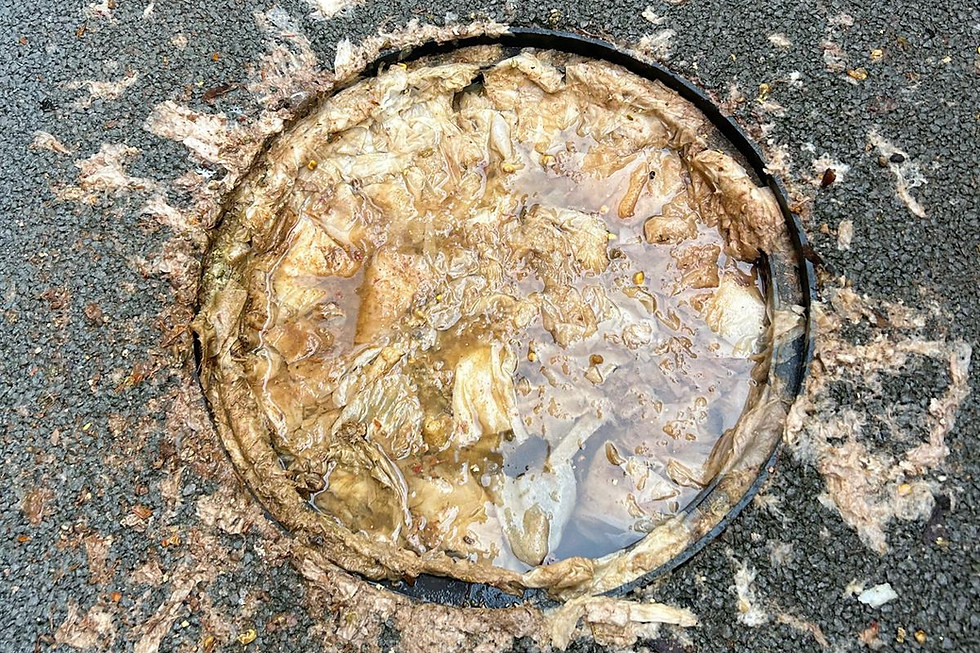
03 Common Signs of a Blocked Drain
Blocked drains don't always result in an immediate flood.
Early warning signs often include:
Slow-draining sinks, baths or showers
Toilets that are slow to flush
Bad smells from drains
Gurgling noises from pipework
Water backing up into gullies or inspection chambers
Repeated blockages in the same location
Overflowing external drains during rainfall
The earlier a blockage is investigated, the less likely it is to develop into a more serious problem.
04 How We Investigate Blockages
Not every blockage requires the same approach.
Our investigation may include:
Visual Inspection
We assess the drainage system and identify any obvious signs of blockage or damage.
High-Pressure Water Jetting
Where appropriate, specialist jetting equipment removes grease, debris, roots and other obstructions.
CCTV Camera Condition Inspection
Once the drain has been cleared, a CCTV Camera Condition Inspection can identify the underlying cause of recurring blockages.
This allows us to recommend permanent solutions rather than simply clearing the drain repeatedly.
05 How Blocked Drains Are Cleared
The most appropriate method depends on the nature of the blockage.
Common techniques include:
High-Pressure Water Jetting
Our preferred method for most blockages.
Ideal for removing:
-
Grease
-
Scale
-
Silt
-
Debris
-
Loose root masses
Mechanical Root Removal
Where tree roots have entered the drainage system, specialist cutting equipment such as Picote milling may be used before carrying out repairs where necessary.
Structural Repairs
If the blockage has been caused by damaged pipework, repairs such as structural lining, patch repairs or excavation may be recommended to prevent recurring problems.
06 When a Blockage Indicates a Bigger Problem
Repeated blockages often suggest there's more than a simple obstruction.
-
Common underlying defects include:
-
Root penetration
-
Cracked pipes
-
Pipe collapses
-
Displaced joints
-
Standing water caused by poor gradients
-
Corroded or deteriorated pipework
Simply clearing the blockage may provide temporary relief, but identifying the underlying cause usually provides the best long-term solution.
07 Preventing Future Blockages
Good drainage habits can significantly reduce the likelihood of future problems.
We recommend:
Avoid pouring fats, oils and grease into sinks.
Never flush wipes, sanitary products or nappies.
Keep gullies free from leaves and debris.
Arrange periodic CCTV inspections where recurring problems occur.
Deal with slow drainage before complete blockages develop.
Preventative maintenance is almost always more cost-effective than emergency call-outs.
08 Emergency Drain Problems
A blocked drain may require urgent attention if you experience:
✓
Internal flooding
✓
Sewage backing up into your property
✓
Overflowing inspection chambers
✓
Multiple fixtures backing up simultaneously
✓
Persistent foul odours
✓
Blockages affecting commercial premises
If you're unsure whether your drainage issue is an emergency, our team will be happy to advise.
09 Why Choose Drainsmart?
A blocked drain is often only the symptom, not the cause.
At Drainsmart, we've been inspecting, clearing and repairing underground drainage systems for over 20 years, helping homeowners, businesses and managing agents across London and the South East resolve drainage problems properly.
Our engineers are accredited by both DrainSafe and the National Association of Drainage Contractors (NADC), giving you confidence that every investigation is carried out to recognised industry standards.
Our credentials include:
-
DrainSafe Accredited Contractor
-
National Association of Drainage Contractors (NADC) Accredited
-
Over 20 years' drainage experience
-
Fully insured engineers
-
High-pressure water jetting
-
CCTV Camera Condition Inspections
-
Honest advice and long-term solutions

10 Need Help With a Blocked Drain?
Whether you're dealing with a one-off blockage or recurring drainage problems, our experienced team can help identify the cause and recommend the most effective long-term solution.
Request a quotation today or call us on 02086633699.
11 Frequently Asked Questions
Our Blocked Drain FAQ covers:
-
Why do my drains keep blocking?
-
Can tree roots cause blockages?
-
Is drain jetting better than drain rods?
-
Do I need a CCTV survey after a blockage?
-
How quickly can you attend?
-
Can blocked drains cause property damage?